






When Sarasota Orchestra publicly announced an anonymous $60 million philanthropic gift1—one of the largest ever given to a U.S. orchestra—the news reverberated far beyond Florida’s Gulf Coast. Designated to support a new Music Center in Sarasota that is a few years from completion, this major gift has already begun to transform the organization, igniting anticipation, pride, and renewed purpose across the community it has long served. Since that landmark gift, Sarasota Orchestra has continued to attract similarly extraordinary philanthropy, securing additional eight-figure commitments.2,3
“It was such a special moment when we finally got to announce that gift to the public,” says Nicole Eibe, Senior Vice President of Advancement and Strategic Initiatives at the Sarasota Orchestra. “I admit, I got a little emotional,” she says. “It is hard not to when you imagine the future impact that this is going to have on our community.”
For Eibe, the emotion reflected decades of careful stewardship and a shared vision that had taken shape quietly over time. She explains that reaching the point where such a transformational philanthropic gift can be shared publicly carries deep meaning. “It is such a beautiful moment,” she says. “You’ve built these relationships over a number of years. These donors aren’t just donors—they’re partners, and this donor, in particular, saw the vision and understood the need from day one.”
Legacy, Community, and the Impact of a Transformational Gift
The public announcement marked a milestone for the Orchestra’s past and future. A major gift of this magnitude, says Sarasota Orchestra President and CEO, Joseph McKenna, signals to the broader music field that orchestras matter and that people believe in their work. For Sarasota Orchestra, that work is to serve the area on two “grand pillars”: performance and education.
Performance is anchored by the ensemble itself—Florida’s oldest continuing orchestra of more than 70 musicians presenting over 125 concerts annually, spanning classical, pops, and chamber music, along with community programs.
Education also takes shape through programs like the Sarasota Music Festival. Founded in 1965 as a small workshop, the festival has evolved into an international two-week immersion that pairs pre-professional musicians from around the world with acclaimed faculty artists for intensive chamber study and performance. Mentorship, collaboration, and exploring artistic craft remain at the heart of the program.
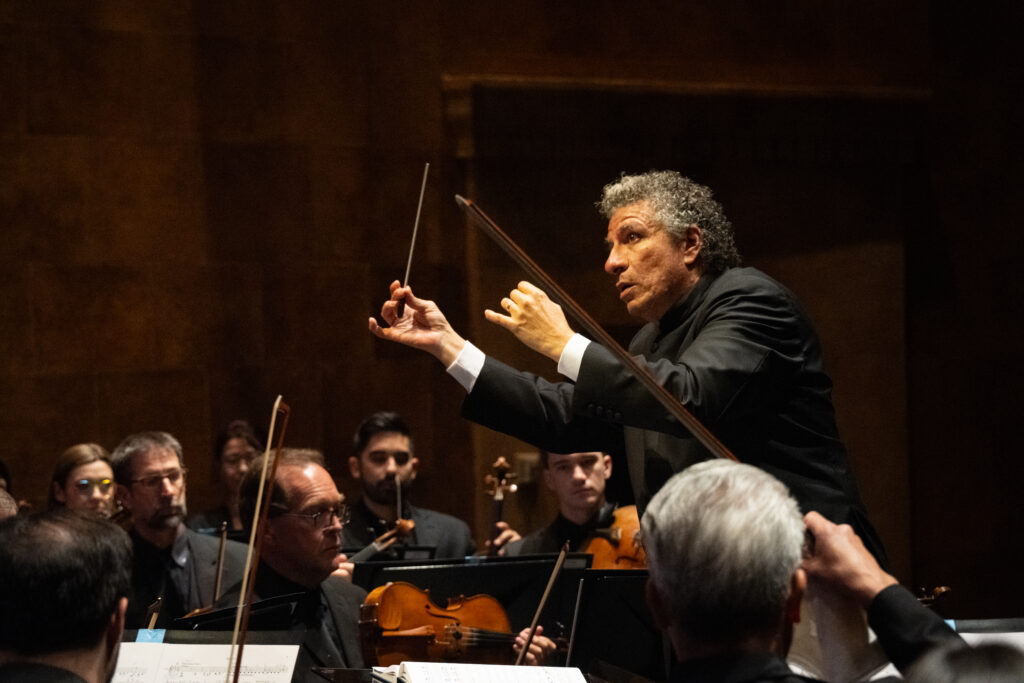
Music Director Giancarlo Guerrero ties that cultural imprint to the promise of a permanent home. Great orchestras, he notes, share a defining asset: “a great concert hall.” With a dedicated space, “people from all around will come and celebrate music in all of its different offerings.”
Educating the Next Generation: Sarasota Youth Orchestra
That commitment to education is perhaps most visible in the organization’s youth programs.
Each year, Sarasota Orchestra performances reach more than 90,000 people, including school concerts for nearly 10,000 elementary students, many experiencing live classical music for the first time. Programs like the Summer Music Camp also introduce thousands of young musicians to ensemble playing and improvisation, regardless of means. In fact, Sarasota Orchestra has never turned a student away due to financial need, providing tuition assistance to more than 50% of Youth Orchestra and Summer Music Camp participants and loaning instruments each year to students. That commitment is reflected in an 87% retention rate of participants continuing from the camp into the 30-week Sarasota Youth Orchestra program.
Established in 1959, the Sarasota Youth Orchestra program now includes eight ensembles serving nearly 300 students from 100 schools across Sarasota and Manatee counties. It is one of the most heralded youth music programs in the southern United States.
Guerrero notes that the Orchestra’s reach has spanned decades, attracting second- and third-generation participants. Some former members of the youth orchestra are now on staff or board members, he says. “Although they may not become professional musicians themselves, they are music lovers.”
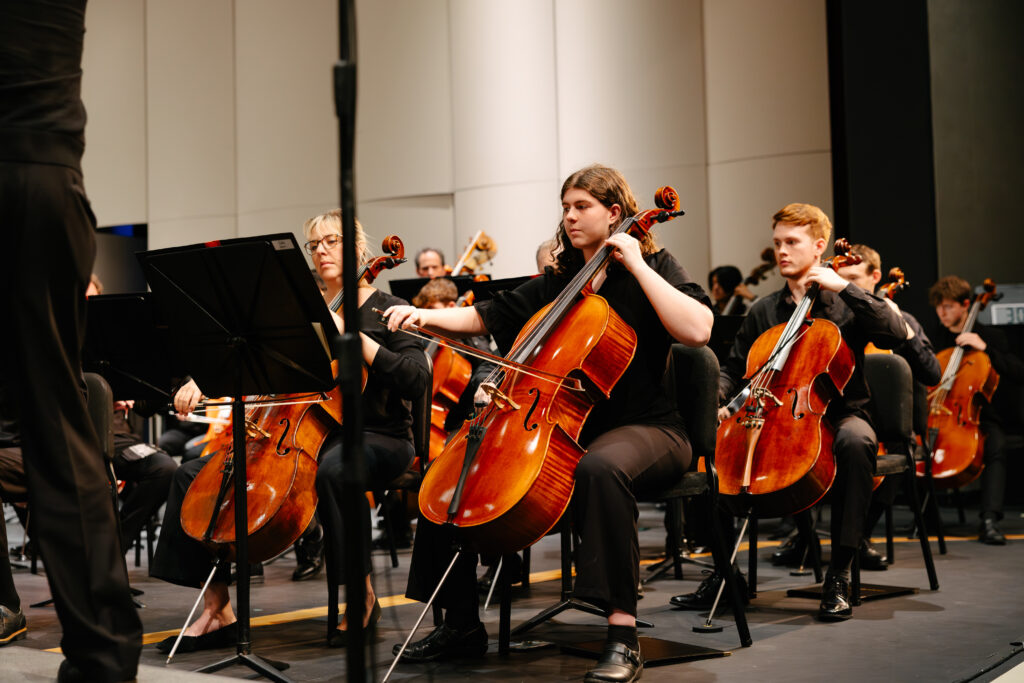
“My first experience with Sarasota Orchestra was actually as a young musician in the youth orchestra program, playing viola,” Eibe recalls, adding that it led to her career in arts administration. Today, the program counts more than 15,000 alumni. Eibe believes that effect could be multiplied for “thousands and thousands of future music education students.”
The Vision for the Sarasota Orchestra Music Center
For decades, Sarasota Orchestra has operated as “kind of a nomad orchestra,” moving between regional rehearsal and performance spaces. “Not all of these spaces are made for big symphony orchestras,” Guerrero explains. Constant movement has made it challenging for the orchestra to develop a consistent sound and style or give audiences the full depth of its performance.
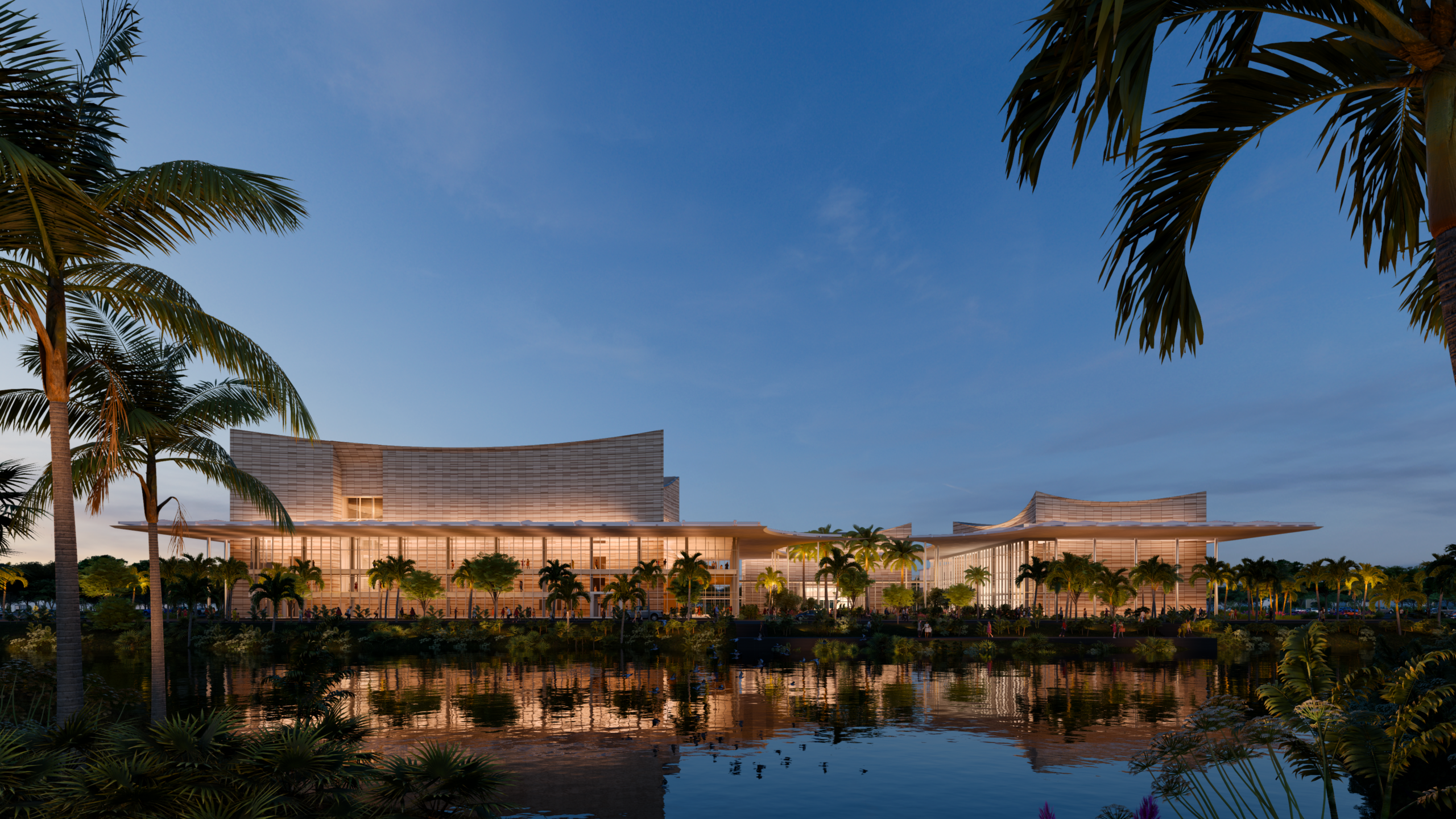
The new Music Center, planned as a $375-$425 million climate-resilient facility breaking ground in 2027, promises to change that. The design includes a concert hall where up to 1,800 people can experience perfect acoustics—the first of its kind on Florida’s Gulf Coast—and an Education Center, surrounded by an open-air courtyard and park-like setting to foster community and connection.
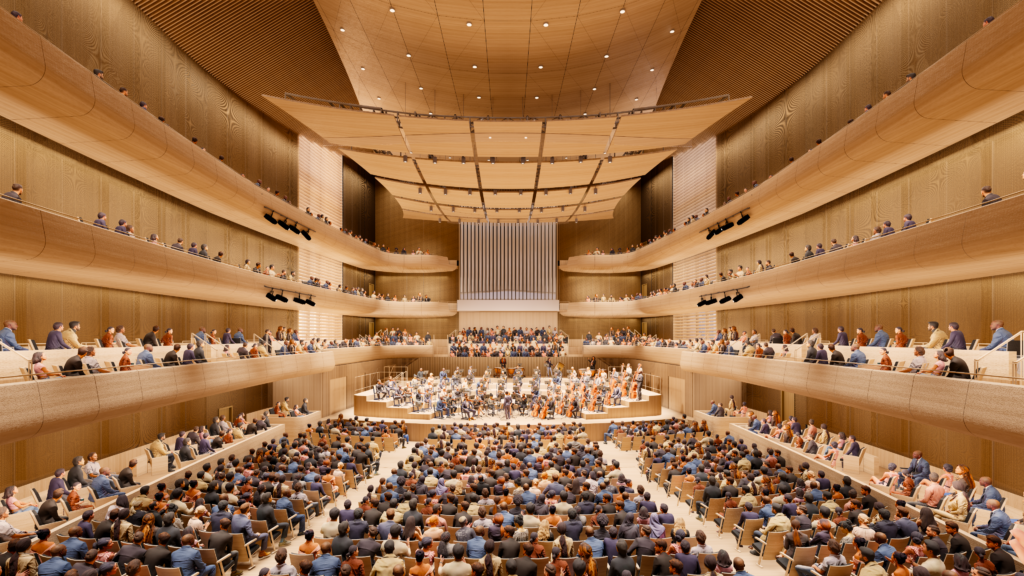
This is where Guerrero says the “dream of that first rehearsal” will come true. “I may have to stop and just take a deep breath,” he says, “because at that moment it’s going to be a completely different world for those of us who are members of this orchestra.”
Beyond providing a home for the musicians, the Music Center is envisioned as a cultural beacon for Sarasota and beyond. “The project will not only reinvigorate the Sarasota Orchestra,” Guerrero notes, “but it will definitely put Sarasota on the world map of great concert halls.” Seeking input from over 30 regional arts organizations, the campus is designed for performance and for celebration, with modern, adaptable spaces that reflect the Orchestra’s and the community’s evolving ambitions.
When the gift was announced, it prompted calls to Guerrero from colleagues around the world asking what was happening in Sarasota. As the first public gift of the fundraising campaign, it also sent a clear message regionally: this was not just a project to watch, but one the community was being invited to be part of.
Planning and Partnership Behind a Major Gift Initiative
Behind the plans for the Music Center is a fundraising campaign meant to sustain it for generations, the scale of which reflects both the project and the community culture supporting it. The goal is to raise enough for capital costs and a significant endowment, so the organization can successfully operate the building once its doors open. Success, says Melissa Rothberg, Executive Vice President at CCS Fundraising, has been “truly a group effort in a way that I’ve never seen before.” She describes relationships between the orchestra’s team and its patrons as unusually close. “This is a family more than anything else,” Rothberg says, noting the trust and connection among supporters and staff.
Guerrero places that generosity within a broader civic context. “In a community like Sarasota,” he says, “a world‑class orchestra is something to be celebrated by everyone who lives there. An ensemble of this caliber makes the city stronger. “Of course, none of it,” he emphasizes, “is possible without the generous support of the citizens of this community.”
That philosophy extends to the way the campaign itself has been shaped. Rather than leading with formulas or donor segmentation alone, Rothberg says the approach centers on personal connection. “They focus on heart,” she explains, reflecting how the orchestra enriches lives and creates lasting legacy.
The campaign also follows a clear timeline: with construction starting in 2027 and the hope of opening the Music Center at the beginning of the 2029–2030 season. For projects of this scale, structure and partnership are essential. McKenna describes the Music Center as a once‑in‑a‑generation undertaking that required early alignment and careful preparation, and a collaborative culture that allows the work to become “bigger than the sum of all of us.”
Looking Ahead: Sarasota Orchestra’s Next Chapter
For Guerrero, this project represents a fundamental shift in what the Orchestra can become. “It will become Vienna, Berlin, London, Chicago, New York, Boston, Sarasota,” he says, indicating that the Orchestra will come into its own on a global stage.

A dedicated hall allows the Orchestra to develop its sound more fully, accelerating artistic growth in ways that are impossible without a consistent acoustic environment. “Most people don’t realize how truly good Sarasota Orchestra is,” he notes, adding that acoustics shape experience as much as performance itself. In a space intended for orchestral music, “you’re not only going to be able to hear the music,” Guerrero says, “you’re going to be able to feel the music, and you’re going to be able to experience a concert in all of its glory.”
As the organization grows, McKenna emphasizes that scale alone cannot define success. One of the project’s defining ambitions, he says, is ensuring that musicians can “become more personal with more people within our community.” The Music Center can support deeper connection—between musicians and audiences, between faculty and students, between local families and the cultural institution.
In Guerrero’s view, the Music Center will be a place where music can gather people, form memory, and give voice to a community’s shared aspirations. What emerges will be more than a building. It will be a cultural presence capable of shaping how a city sees itself, and how it is seen by the world.
Eibe predicts the Music Center will be “nothing short of transformational.” Artists will be drawn to perform in a venue built for excellence, while expanded education and enhanced festival programming will help foster the next generation of musicians. What it ultimately makes possible, she believes, may take years to fully understand. “I truly don’t think that we can fathom today what the full impact of this Music Center will be on our future.”
References
1 Sarasota Orchestra. “Sarasota Orchestra Celebrates Historic $60 Million Investment in New Music Center.” Accessed May 18, 2026.
2 Sarasota Orchestra. “Jack and Priscilla Schlegel Champion Sarasota Orchestra’s Future with $10 Million Gift for New Music Center.” Accessed May 18, 2026.
3 Sarasota Orchestra. “Sarasota Orchestra Announces $11.7M Gift and Releases Renderings of New Music Center.” Accessed May 18, 2026.