






For faith-based institutions, steady stewardship defined fundraising in 2025. Annual appeals and recurring giving, supported by committed donor relationships, sustained revenue across the sector.
Of 618 organizations participating in the 2026 Philanthropy Pulse survey in late 2025, 48 self-identified as belonging to the faith sector. Their responses provide insight into how institutions are reinforcing donor loyalty and operational discipline while directing resources toward mission work and long-term sustainability.
Here are three of the key themes that emerged:
1. Annual Stewardship and Recurring Giving Patterns
Annual stewardship continues to anchor fundraising across faith-based institutions. Revenue increased for 64% of respondents, and 60% reported that their annual appeal exceeded its goal. For many institutions, steady year-over-year outreach to parishioners and community members continues to generate dependable support.
For arch‑dioceses, 62% report focusing their time on the annual appeal, an increase of 25 percentage points from last year. At the same time, 20% of all faith-based organizations report a cost to raise a dollar below $0.10, pointing to strong operational efficiency alongside sustained stewardship.
2. Allocation of Funds Across Mission and Ministry
Financial priorities across faith-based institutions shifted in 2025. Organizations increased funding for mission work and outreach to 33%, up from 21% the prior year. At the same time, they reduced support for spreading the gospel and discipleship initiatives from 26% to 17%, and decreased investment in seminarian support and clergy development from 21% to 13%.
By directing more resources toward mission work and outreach, institutions are placing greater emphasis on outward-facing ministry and community engagement in the year ahead.
3. Donor Retention, Acquisition, and Long-Term Commitment
Faith-based institutions continued to grow and retain their donor base. Nearly two-thirds increased new donor acquisition, and 41% retained at least 60% of donors acquired over the past three years.
Giving also continues to rely primarily on cash contributions. Most institutions receive 20% or less of total giving from noncash assets, and 57% report donor-advised funds at 0–10% of overall giving. Looking ahead, leaders anticipate growth in planned giving and major gifts (53% each), along with midlevel gifts (51%).
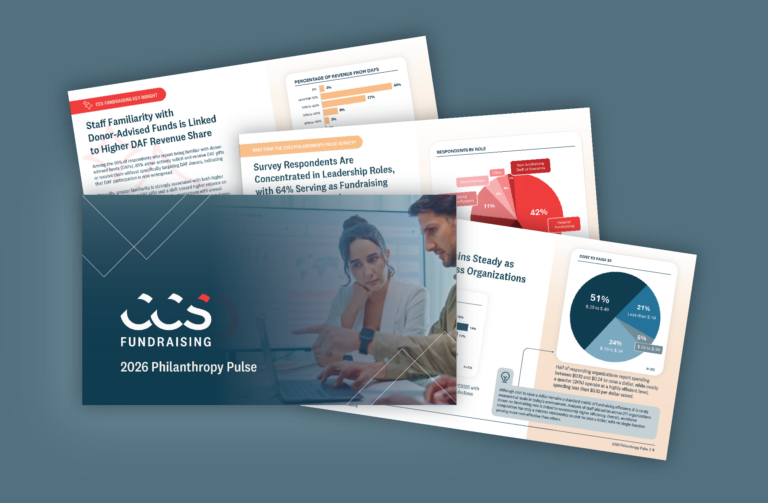
Explore the 2026 Philanthropy Pulse Faith Sector Spotlight
These findings reflect key themes shaping faith-based fundraising this year, but they do not capture the full picture. The Faith Sector Spotlight examines government funding impacts, board participation patterns, pastoral planning approaches, and projected changes across revenue streams—factors that influence how institutions sustain support over time.