




For primary and secondary schools, fundraising in 2025 focused on sustaining core programs and strengthening day-to-day support. Rather than pursuing aggressive expansion, many institutions prioritized dependable annual giving and steady campaign performance.
Of 618 organizations participating in the 2026 Philanthropy Pulse survey in late 2025, 85 self-identified as belonging to the primary & secondary school sector. Their responses provide insight into how schools are focusing on operating support, steady donor relationships, and thoughtful planning as funding expectations and staffing needs change.
Here are three of the key themes that emerged:
1. Revenue Composition and Operating Support Priorities
Primary and secondary schools directed the largest share of campaign funding toward current operating support. Among schools in campaign, nearly half of funds raised (48%) supported current operating needs, compared with 20% directed to capital projects and 15% to endowment growth. For many institutions, strengthening day-to-day support took priority over expansion.
Annual giving followed a similar pattern. More than 60% of schools reported increases, including 22% that saw significant gains of more than 10%, and 75% saw overall revenue rise. Together, these results point to a preference for dependable operating support and steady growth over large-scale investment.
2. Donor Acquisition, Retention, and Endowment Giving
Schools continued to grow donor engagement in 2025. Nearly two-thirds (63%) increased new donor acquisition, and another 24% reported no change. At the same time, 45% retained at least 60% of donors acquired over the past three years.
Schools are beginning to spread endowment support across more priorities. Tuition assistance and scholarships still receive the largest share, but that portion declined to 42%, down from 54% the prior year. More schools are directing endowment support toward programs (19%) and faculty salaries and professional development (9%).
3. Capacity, Policy Outlook, and Planning
For many primary and secondary schools, government policy has not had a significant impact on fundraising. More than half of schools (55%) say they have not experienced an impact so far, and less than one-quarter say it has negatively affected their efforts. Even so, some schools expect federal (22%) and state or regional funding (16%) to decline in the coming year.
When leaders look ahead, they see growth coming from individual giving. Mid-level gifts (57%), major gifts (54%), and annual appeal (53%) top the list. With modest public funding expectations and hiring challenges—only 24% increased fundraising staff and 55% report difficulty hiring — schools are planning carefully and prioritizing steady, sustainable growth over expansion.
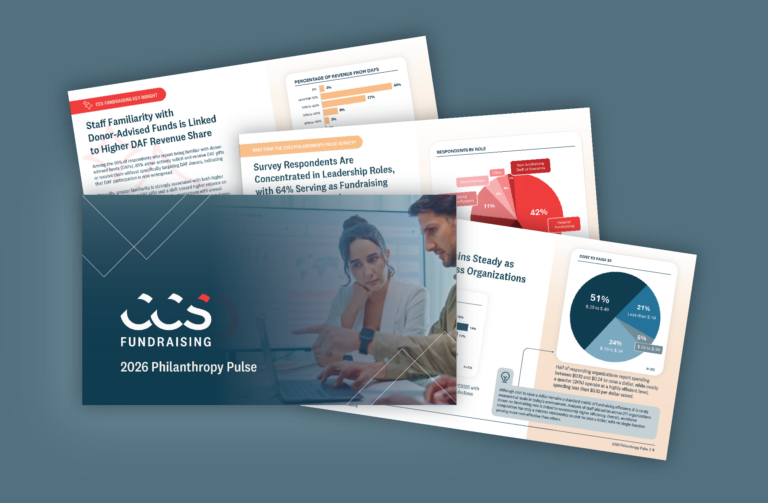
Explore the 2026 Philanthropy Pulse Primary & Secondary Schools Sector Spotlight
These primary and secondary school survey findings capture the central themes shaping school fundraising this year, but they don’t tell the whole story. The Primary & Secondary Schools Sector Spotlight offers additional context on areas such as policy effects, staffing pressures, and the role of boards and noncash giving—factors that also influence how schools plan for the year ahead.